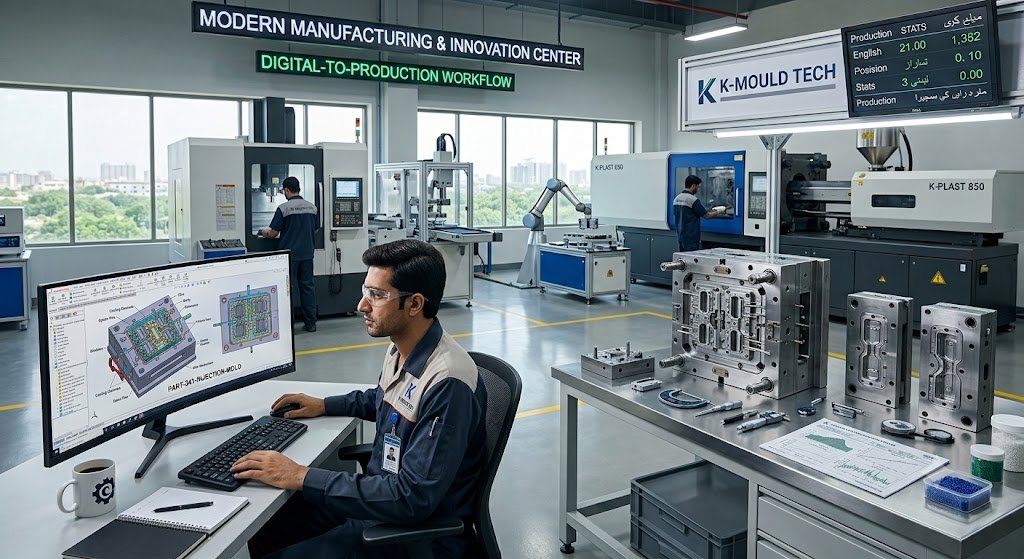
RepMold: Everything You Need to Know About RepMold
Introduction
RepMold is a term associated with mold replication, mold design, and manufacturing solutions that help businesses create accurate molds for industrial production. Whether you’re involved in plastic injection molding, product development, prototyping, or manufacturing, understanding RepMold can improve efficiency, reduce production costs, and enhance product quality. This guide explains what RepMold is, how it works, its key features, advantages, practical applications, and why it has become an important concept in modern manufacturing.
What Is RepMold?
RepMold refers to a manufacturing approach or solution focused on creating, reproducing, or managing molds with high precision. In many industries, molds are essential for producing identical components repeatedly while maintaining consistent quality.
Modern mold replication combines engineering expertise with digital design, computer-aided manufacturing (CAM), and advanced machining technologies to produce accurate tooling for mass production.
Businesses rely on mold replication because it helps:
- Produce identical parts consistently
- Reduce manufacturing errors
- Improve production speed
- Lower long-term manufacturing costs
- Maintain product quality standards
As manufacturing technologies continue to evolve, efficient mold management has become more valuable than ever.
How RepMold Works
The mold replication process follows several important stages to ensure accuracy and consistency.
Product Design
Everything begins with a digital product design using CAD (Computer-Aided Design) software.
Engineers create a detailed 3D model that includes every measurement, curve, and feature required for manufacturing.
Mold Engineering
Once the design is complete, engineers develop the mold itself.
During this stage, they evaluate:
- Material flow
- Cooling systems
- Vent placement
- Gate locations
- Mold durability
- Production efficiency
Careful planning reduces defects during manufacturing.
Mold Manufacturing
After engineering approval, precision equipment creates the mold.
Common manufacturing methods include:
- CNC machining
- EDM machining
- Precision milling
- Surface finishing
- Heat treatment
Every step focuses on achieving exact specifications.
Testing and Validation
Before mass production begins, manufacturers test the mold extensively.
Testing checks for:
- Dimensional accuracy
- Product quality
- Material flow
- Surface finish
- Cycle time
- Defect prevention
Only after successful validation does full-scale production begin.
Key Features of RepMold
Modern mold replication solutions include several important capabilities that improve manufacturing performance.
High Precision
Accuracy is one of the biggest advantages.
Even tiny measurement differences can affect thousands of manufactured products.
RepMold processes focus on maintaining tight tolerances throughout production.
Faster Production
Efficient mold systems reduce production delays.
Once a quality mold is completed, manufacturers can produce large quantities quickly while maintaining consistent quality.
Repeatability
Repeatability ensures every manufactured part matches the original design.
This consistency is essential in industries where safety and precision matter.
Material Compatibility
RepMold solutions often support various materials, including:
- Plastic
- Rubber
- Silicone
- Composite materials
- Certain metals
The appropriate mold design depends on the product and manufacturing process.
Long Service Life
High-quality molds are built to withstand thousands—or even millions—of production cycles with proper maintenance.
This significantly lowers long-term production costs.
Benefits of Using RepMold
Organizations adopt advanced mold replication methods because of the many operational advantages they provide.
Improved Product Quality
Precision molds produce consistent parts with fewer defects.
Customers receive products that meet the same specifications every time.
Lower Manufacturing Costs
Although quality mold development requires an initial investment, the long-term savings are substantial.
Manufacturers reduce costs by minimizing:
- Material waste
- Defective products
- Production downtime
- Manual adjustments
Better Production Efficiency
Well-designed molds reduce cycle times.
This means more products can be manufactured within the same timeframe.
Easier Product Scaling
Businesses planning to increase production benefit from reliable mold systems.
Scaling becomes easier because the mold consistently produces identical components.
Reduced Human Error
Automation and precision engineering reduce dependence on manual processes.
As a result, production becomes more reliable.
Industries That Use RepMold
Many industries rely on mold replication for manufacturing complex products.
Automotive Manufacturing
Vehicle manufacturers produce thousands of identical components every day.
Examples include:
- Dashboard parts
- Interior trim
- Plastic covers
- Lighting components
- Connectors
Consistency is critical for vehicle safety and quality.
Medical Devices
Medical equipment often requires extremely precise molded components.
Applications include:
- Syringes
- Surgical tools
- Diagnostic equipment
- Laboratory containers
- Medical packaging
Strict quality standards make precision essential.
if you want to know, CRM and Task Management Software Reviews, click here.
Consumer Electronics
Electronic devices contain numerous molded plastic components.
Manufacturers use mold replication for:
- Smartphone cases
- Keyboard parts
- Connectors
- Chargers
- Device housings
Precision helps ensure proper assembly.
Packaging Industry
Packaging companies use molds to manufacture:
- Bottle caps
- Containers
- Cosmetic packaging
- Food packaging
- Industrial packaging
Fast production supports high-volume manufacturing.
Aerospace
Aircraft components require exceptional precision.
High-quality molds contribute to producing lightweight, durable, and reliable parts.
RepMold and Modern Manufacturing Technology
Manufacturing has changed dramatically with digital technology.
RepMold processes now integrate several advanced tools.
CAD Software
Computer-Aided Design allows engineers to create highly accurate digital models before manufacturing begins.
Design changes are easier and less expensive than modifying physical molds.
CNC Machining
Computer-controlled machining improves accuracy and reduces production errors.
Complex mold geometries become much easier to manufacture.
Simulation Software
Simulation predicts how materials will behave inside the mold.
Engineers can identify potential issues before production starts.
This reduces costly redesigns later.
Automation
Modern manufacturing systems automate many repetitive tasks.
Automation improves:
- Speed
- Precision
- Repeatability
- Productivity
Choosing the Right Mold Replication Solution
Selecting the right manufacturing solution requires careful evaluation.
Consider these factors before making a decision.
Production Volume
Low-volume production may require different tooling than mass manufacturing.
Choose a solution that matches production needs.
Material Type
Different materials require different mold designs.
For example:
- Thermoplastics
- Silicone
- Rubber
- Engineering plastics
Each material behaves differently during molding.
Accuracy Requirements
Products used in healthcare or aerospace require tighter tolerances than many consumer goods.
Understanding precision requirements helps determine the best manufacturing approach.
Maintenance Requirements
High-quality molds still require regular maintenance.
Routine inspections help prevent:
- Wear
- Surface damage
- Cooling issues
- Production defects
Proper maintenance extends mold lifespan significantly.
Common Challenges in Mold Manufacturing
Even experienced manufacturers encounter challenges.
Understanding these issues helps improve production planning.
High Initial Cost
Developing precision molds can require significant investment.
However, businesses usually recover these costs through efficient large-scale production.
Design Complexity
Complex products require equally sophisticated molds.
Engineering expertise becomes especially important during development.
Maintenance Downtime
Molds must occasionally be serviced or repaired.
Scheduled maintenance reduces unexpected production interruptions.
Material Shrinkage
Some materials shrink as they cool.
Engineers compensate for this during mold design to maintain dimensional accuracy.
Best Practices for Successful Mold Replication
Following proven practices leads to better manufacturing outcomes.
Invest in Quality Design
A well-designed mold reduces production issues from the beginning.
Accurate engineering saves time and money later.
Perform Regular Testing
Routine quality inspections identify problems before they affect production.
Early detection prevents costly defects.
Maintain Equipment
Proper maintenance improves both mold performance and production efficiency.
Cleaning, lubrication, and inspection should become standard procedures.
Train Operators
Skilled technicians understand machine settings, material behavior, and quality control.
Training reduces manufacturing errors.
Monitor Production Data
Modern manufacturing systems collect valuable production data.
Tracking cycle times, defect rates, and machine performance helps optimize operations.
Future Trends in RepMold
Manufacturing continues to evolve rapidly.
Several emerging technologies are shaping the future of mold replication.
Artificial Intelligence
AI helps optimize mold design, predict maintenance needs, and improve production planning.
3D Printing
Additive manufacturing allows rapid prototype molds before investing in permanent tooling.
This speeds product development.
Smart Manufacturing
Connected machines share production data in real time.
Manufacturers gain greater visibility into quality and efficiency.
Sustainable Manufacturing
Companies increasingly focus on reducing waste, improving energy efficiency, and using recyclable materials.
Modern mold technologies support these sustainability goals.
Frequently Asked Questions
What is RepMold used for?
RepMold is primarily used to create accurate molds for manufacturing products consistently. Industries such as automotive, medical, electronics, and packaging rely on precision molds for efficient large-scale production.
Is RepMold suitable for small businesses?
Yes. Small businesses can benefit from mold replication, especially when producing products in moderate or large quantities. The right solution depends on production volume, budget, and product complexity.
What materials can be used with RepMold?
RepMold processes commonly support plastics, rubber, silicone, composite materials, and certain metals. Material selection depends on the product’s intended use and manufacturing requirements.
How long does a quality mold last?
A well-designed and properly maintained mold can last from tens of thousands to several million production cycles, depending on the material, operating conditions, and maintenance schedule.
Why is precision important in mold manufacturing?
Precision ensures that every manufactured part matches the original design. Accurate molds reduce waste, improve product quality, minimize defects, and increase production efficiency.
Conclusion
RepMold plays an important role in modern manufacturing by enabling accurate, repeatable, and efficient mold production for a wide range of industries. From automotive and medical devices to consumer electronics and packaging, precision mold replication helps businesses improve product quality, reduce costs, and scale production with confidence.
As manufacturing technologies continue to advance through automation, AI, simulation, and digital engineering, RepMold solutions are becoming even more capable and efficient. Whether you’re exploring mold replication for a new product or looking to optimize an existing manufacturing process, investing in precision tooling and best practices can deliver long-term value and reliable production results. Continue researching modern manufacturing technologies to identify the solutions that best fit your business goals.