Brake Booster Check Valve Symptoms: Signs, Causes, Testing, and Replacement Guide
Introduction
Recognizing brake booster check valve symptoms early can help you avoid reduced braking performance and costly repairs. Common signs include a hard brake pedal, hissing noises, poor engine idle, increased stopping distance, and loss of brake assist after the engine is turned off. Since the check valve maintains vacuum pressure inside the brake booster, even a small failure can affect both braking performance and engine operation. Understanding these symptoms allows you to diagnose problems quickly and keep your vehicle safe on the road.
What Is a Brake Booster Check Valve?
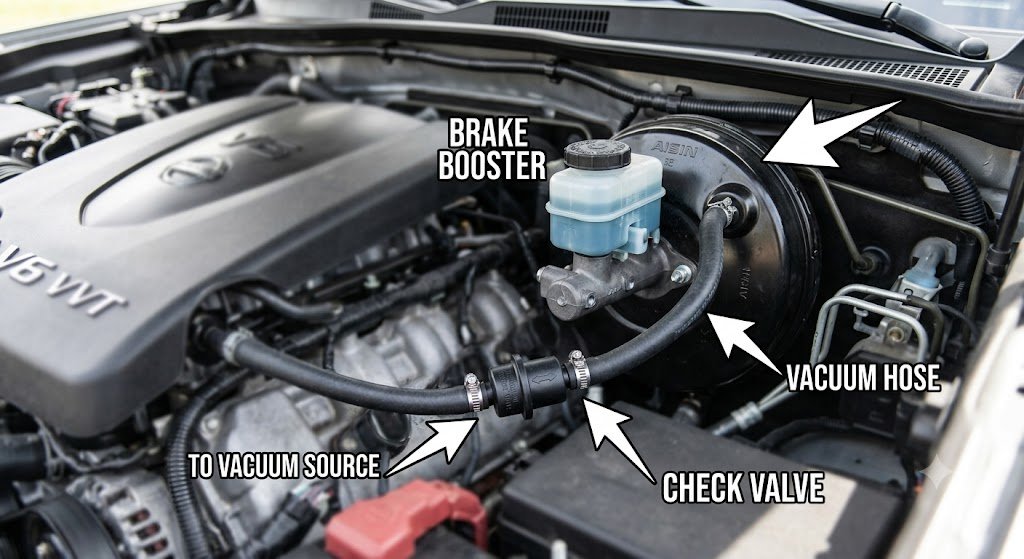
The brake booster check valve is a small but essential one-way valve installed between the engine’s vacuum source and the brake booster.
Its primary purpose is to allow vacuum pressure to enter the brake booster while preventing it from escaping. This stored vacuum provides power assistance whenever you press the brake pedal.
Even if the engine suddenly loses vacuum—such as during acceleration or if the engine stalls—the check valve helps retain enough vacuum inside the brake booster for one or two assisted brake applications.
Without a properly functioning check valve, braking becomes significantly more difficult.
How the Brake Booster Check Valve Works
The brake booster relies on engine vacuum to reduce the amount of force needed to press the brake pedal.
Here’s how the system operates:
- The engine generates vacuum.
- Vacuum travels through the vacuum hose.
- The check valve allows vacuum into the brake booster.
- The valve closes to prevent vacuum from escaping.
- The brake booster stores vacuum for consistent brake assist.
Because the valve only allows airflow in one direction, it protects the brake booster from losing stored vacuum when engine vacuum drops.
Brake Booster Check Valve Symptoms
Several warning signs indicate that the check valve may be failing.
Hard Brake Pedal
One of the most noticeable symptoms is a brake pedal that feels unusually stiff.
Without adequate vacuum assistance, you’ll need much more force to slow or stop the vehicle.
Drivers often notice:
- Increased pedal resistance
- Greater leg effort
- Reduced braking comfort
- Difficulty stopping in traffic
A hard brake pedal should never be ignored.
Hissing Noise Near the Brake Booster
A leaking check valve can create a vacuum leak.
This often produces a continuous or intermittent hissing sound under the dashboard or inside the engine compartment.
The noise usually becomes more noticeable:
- While pressing the brake pedal
- At idle
- After starting the engine
A hissing sound often indicates escaping vacuum pressure.
Increased Stopping Distance
When brake assist decreases, your vehicle requires more effort to stop.
Although the braking system still functions mechanically, stopping distances increase because the driver cannot apply braking force as quickly or effectively.
This symptom becomes especially dangerous during emergency braking situations.
Engine Rough Idle
Since the brake booster is connected to the engine’s vacuum system, a leaking check valve may create a vacuum leak.
Common engine symptoms include:
- Rough idle
- Engine hesitation
- Higher idle speed
- Poor fuel economy
- Occasional stalling
These symptoms may seem unrelated to the brakes but often share the same root cause.
Brake Pedal Changes After Turning Off the Engine
Normally, after switching off the engine, you should still have one or two assisted brake applications.
If the brake pedal becomes hard immediately after shutting the engine off, the check valve may no longer be holding vacuum inside the brake booster.
This is one of the easiest symptoms to identify.
Check Engine Light
Although not every vehicle monitors brake booster vacuum directly, a significant vacuum leak can trigger diagnostic trouble codes.
Modern vehicles may illuminate the Check Engine Light due to:
- Vacuum leaks
- Lean fuel mixture
- Air intake problems
Scanning the vehicle with an OBD-II scanner can provide additional diagnostic information.
Common Causes of Brake Booster Check Valve Failure
Like any automotive component, the check valve wears out over time.
Common causes include:
- Aging plastic materials
- Heat damage
- Internal valve failure
- Cracked housing
- Contaminated vacuum lines
- Oil contamination
- Physical damage during maintenance
High engine temperatures gradually weaken plastic valves, making them brittle.
Why a Faulty Check Valve Is Dangerous
Many drivers continue driving despite early symptoms.
However, ignoring a failing check valve increases the risk of:
- Reduced braking performance
- Longer stopping distances
- Brake pedal fatigue
- Greater accident risk
- Damage to the brake booster
Although hydraulic brakes continue working, losing vacuum assistance makes emergency braking much more difficult.
How to Test a Brake Booster Check Valve
Fortunately, testing the valve is relatively straightforward.
Perform the Brake Pedal Test
Follow these simple steps:
- Turn off the engine.
- Press the brake pedal several times.
- Hold the brake pedal down.
- Start the engine.
If the brake pedal drops slightly after the engine starts, the brake booster is receiving vacuum properly.
If it doesn’t move, further inspection is needed.
Remove and Inspect the Check Valve
After removing the valve:
- Look for cracks.
- Inspect the rubber grommet.
- Check the vacuum hose.
- Examine for loose fittings.
Visible damage often confirms replacement is necessary.
Blow Through the Valve
A healthy check valve only allows airflow in one direction.
Try blowing air through both ends.
Results should be:
- Air passes in one direction.
- Air is blocked in the opposite direction.
If air flows both ways or neither way, the valve has failed.
Use a Hand Vacuum Pump
Professional technicians often verify valve operation using a vacuum pump.
The valve should:
- Hold vacuum
- Prevent pressure loss
- Respond consistently during repeated tests
This provides the most accurate diagnosis.
Brake Booster Check Valve vs Brake Booster Failure
Many symptoms overlap, making diagnosis confusing.
| Symptom | Check Valve | Brake Booster |
|---|---|---|
| Hard brake pedal | Yes | Yes |
| Vacuum leak | Yes | Sometimes |
| Hissing sound | Yes | Yes |
| Immediate vacuum loss | Yes | Yes |
| Internal diaphragm damage | No | Yes |
| Complete brake assist failure | Sometimes | Yes |
A faulty booster is generally more expensive than replacing the check valve.
Can You Drive With a Bad Brake Booster Check Valve?
Technically, yes—but it is not recommended.
A failing check valve reduces brake assistance, especially during sudden stops.
Driving with this issue may be manageable under normal conditions but becomes dangerous when:
- Traffic stops suddenly
- Driving downhill
- Carrying heavy loads
- Towing a trailer
- Driving in wet weather
Prompt repairs improve both safety and confidence behind the wheel.
if you want to know, Costa Rica Solo Travel, click here.
How to Replace a Brake Booster Check Valve
Replacing the valve is usually simple.
Tools You May Need
- Screwdriver
- Pliers
- Replacement check valve
- Safety gloves
Replacement Steps
- Turn off the engine.
- Locate the brake booster.
- Disconnect the vacuum hose.
- Remove the old check valve.
- Install the new valve in the correct direction.
- Reconnect the hose.
- Start the engine.
- Test brake pedal operation.
Most replacements take less than 30 minutes.
How Much Does Replacement Cost?
Costs vary depending on the vehicle make and model.
Typical estimates include:
| Item | Estimated Cost |
|---|---|
| Check valve | $10–$40 |
| Labor | $40–$120 |
| Total repair | $50–$160 |
Luxury vehicles may cost more due to specialized parts.
Replacing the valve early is far less expensive than replacing an entire brake booster.
Preventing Future Check Valve Problems
Although no component lasts forever, proper maintenance extends service life.
Helpful maintenance tips include:
- Inspect vacuum hoses regularly.
- Replace cracked rubber fittings.
- Repair vacuum leaks promptly.
- Avoid excessive engine oil contamination.
- Perform routine brake inspections.
- Listen for unusual engine noises.
- Replace worn components before complete failure.
Routine inspections often catch small issues before they become major repairs.
Signs It’s Time to Visit a Mechanic
While some vehicle owners can replace the valve themselves, professional diagnosis is recommended if you notice:
- Extremely hard brake pedal
- Brake warning light
- Persistent hissing
- Brake performance changes
- Engine stalling with braking
- Repeated vacuum leaks
A technician can determine whether the problem involves the check valve, brake booster, vacuum hose, or another braking component.
Frequently Asked Questions
1. What are the most common brake booster check valve symptoms?
The most common symptoms include a hard brake pedal, hissing noises, poor engine idle, increased stopping distance, vacuum leaks, and losing brake assist shortly after turning off the engine. These signs usually indicate that the valve is no longer holding vacuum properly.
2. Can a bad brake booster check valve cause engine problems?
Yes. A faulty check valve can create a vacuum leak, leading to rough idle, hesitation, reduced fuel efficiency, lean air-fuel mixtures, and even a Check Engine Light on some vehicles.
3. How do I know if the brake booster or the check valve is bad?
Start by testing the check valve since it is inexpensive and easy to inspect. If the valve passes inspection but brake assist remains poor, the brake booster itself may have an internal diaphragm failure.
4. Is replacing a brake booster check valve difficult?
For many vehicles, replacing the check valve is a straightforward DIY repair. It usually involves removing the vacuum hose, replacing the valve, and testing the brake system. Always ensure the new valve is installed in the correct direction.
5. How long does a brake booster check valve last?
Most check valves last many years and often exceed 100,000 miles under normal driving conditions. However, heat, age, contaminated vacuum lines, and engine-related issues can shorten their lifespan.
Conclusion
Understanding brake booster check valve symptoms can help you identify braking problems before they become serious safety hazards. Warning signs such as a hard brake pedal, hissing noises, rough engine idle, and increased stopping distance often point to a failing check valve or a related vacuum issue. Fortunately, diagnosing the problem is usually straightforward, and replacing the valve is often an affordable repair.
If you notice any of these symptoms, inspect the brake booster system promptly or have it checked by a qualified mechanic. Taking action early can restore proper brake assist, improve driving confidence, and help keep you and your passengers safe on every journey.