Difference Between NAD and NAC: Benefits, Uses, and Which Supplement Is Right for You?
Introduction
The difference between NAD and NAC comes down to their roles in the body. NAD (Nicotinamide Adenine Dinucleotide) is a coenzyme that helps your cells produce energy and supports healthy aging, while NAC (N-Acetyl Cysteine) is an amino acid derivative best known for boosting glutathione, the body’s most powerful antioxidant. Although both supplements promote cellular health, they work in completely different ways and serve different health goals. Understanding these differences can help you choose the supplement that best matches your needs, whether you’re looking to improve energy, support liver function, enhance recovery, or promote long-term wellness.
What Is the Difference Between NAD and NAC?
When people search What is difference between NAD and NAC, they’re often trying to determine whether these supplements perform the same function. The answer is no.
Here’s a quick comparison:
| Feature | NAD | NAC |
|---|---|---|
| Full Name | Nicotinamide Adenine Dinucleotide | N-Acetyl Cysteine |
| Primary Function | Cellular energy production | Increases glutathione production |
| Main Benefit | Supports metabolism and healthy aging | Antioxidant and liver support |
| Naturally Found | Present in every living cell | Derived from the amino acid cysteine |
| Common Use | Energy, longevity, brain health | Detoxification, respiratory health |
Although both contribute to overall health, they target different biological pathways.
What Is NAD?
NAD is a naturally occurring coenzyme found in every cell of the body. It plays a vital role in converting food into usable energy.
Without sufficient NAD, cells struggle to perform essential tasks efficiently.
How NAD Works
NAD helps enzymes involved in hundreds of metabolic reactions. It is especially important for:
- ATP (energy) production
- DNA repair
- Cellular communication
- Healthy mitochondrial function
- Activating sirtuins linked to longevity
Unfortunately, NAD levels decline naturally with age, stress, illness, and poor lifestyle habits.
Benefits of NAD
Research suggests that maintaining healthy NAD levels may support:
- Increased energy production
- Better cognitive performance
- Improved muscle recovery
- Healthy aging
- DNA repair
- Metabolic health
- Reduced fatigue
- Enhanced mitochondrial function
Because of these benefits, NAD has become popular among people interested in longevity and wellness.
What Is NAC?
NAC stands for N-Acetyl Cysteine, a stable form of the amino acid cysteine.
Its primary role is helping the body produce glutathione, often called the “master antioxidant.”
Glutathione protects cells from oxidative stress caused by pollution, toxins, aging, and inflammation.
How NAC Works
After supplementation, NAC converts into cysteine, which the body uses to manufacture glutathione.
Higher glutathione levels help:
- Neutralize free radicals
- Support liver detoxification
- Reduce oxidative stress
- Improve immune defenses
- Protect healthy cells
Unlike NAD, NAC is not directly involved in cellular energy production.
Benefits of NAC
NAC is widely studied for its antioxidant properties.
Potential benefits include:
- Liver protection
- Respiratory health support
- Reduced oxidative stress
- Improved immune function
- Better recovery after illness
- Support for healthy brain function
- Assistance in detoxification
- Protection against environmental toxins
Healthcare providers also use prescription NAC in hospitals to treat acetaminophen overdose.
Difference Between NAD and NAC Supplements
Many people specifically search for the difference between NAD and NAC supplements because both are available as capsules, powders, and intravenous therapies.
The biggest difference lies in their purpose.
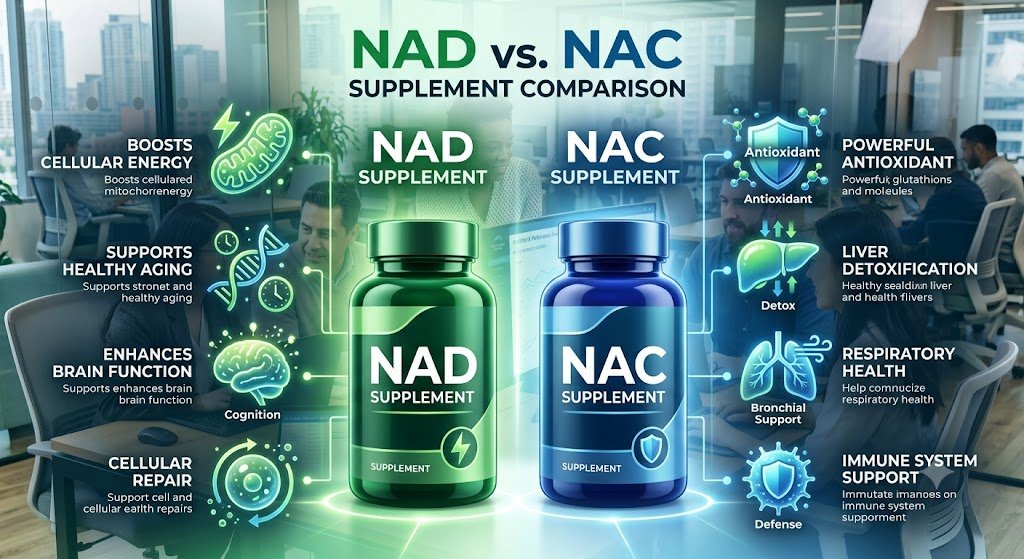
NAD Supplements Focus On
- Boosting cellular energy
- Supporting healthy aging
- Enhancing mitochondrial performance
- Improving cognitive function
- Promoting DNA repair
NAC Supplements Focus On
- Increasing glutathione production
- Supporting liver health
- Fighting oxidative stress
- Respiratory support
- Detoxification
Although their benefits may overlap in certain areas, they achieve those outcomes through entirely different biological mechanisms.
if you want to know, Teeth Growing Behind Milk Teeth: Causes & Treatment, click here.
NAD vs NAC: Which One Is Better?
There isn’t a universal winner.
The better choice depends on your personal health goals.
Choose NAD If You Want
- More daily energy
- Healthy aging support
- Better focus
- Improved cellular repair
- Enhanced athletic recovery
- Mitochondrial support
Choose NAC If You Want
- Liver support
- Strong antioxidant protection
- Better respiratory health
- Recovery from oxidative stress
- Increased glutathione production
- Additional detox support
Instead of asking which supplement is better, it’s more useful to ask which one better matches your current health priorities.
Can You Take NAD and NAC Together?
Yes.
Many healthcare professionals believe these supplements may complement one another because they work through different biological pathways.
NAD supports cellular energy, while NAC protects cells from oxidative damage.
Potential combined benefits may include:
- Improved cellular health
- Better recovery
- Enhanced antioxidant protection
- Support for healthy aging
- Improved metabolic function
However, anyone taking prescription medications or managing chronic health conditions should consult a healthcare professional before combining supplements.
How NAD and NAC Affect Healthy Aging
Aging is influenced by many biological processes, including declining energy production and increasing oxidative stress.
NAD and NAC target these two issues differently.
NAD Supports Aging By
- Maintaining mitochondrial health
- Supporting DNA repair
- Improving cellular metabolism
- Activating longevity-related enzymes
NAC Supports Aging By
- Increasing antioxidant defenses
- Protecting cells from free radicals
- Reducing oxidative damage
- Supporting detoxification pathways
Together, these mechanisms may contribute to healthier aging, although ongoing research continues to explore their long-term effects.
Side Effects and Safety
Both supplements are generally considered safe when used appropriately, but side effects can occur.
Possible NAD Side Effects
Some users report:
- Nausea
- Headache
- Flushing
- Digestive discomfort
- Mild fatigue
These symptoms are often temporary.
Possible NAC Side Effects
Common side effects include:
- Stomach upset
- Diarrhea
- Nausea
- Heartburn
- Unpleasant sulfur-like odor or taste
People with asthma should use NAC only under medical supervision because it may affect the airways in some individuals.
Food Sources of NAD and NAC
Although supplements are popular, nutrition also supports these pathways.
Foods That Support NAD Production
Foods rich in vitamin B3 include:
- Chicken
- Turkey
- Tuna
- Salmon
- Peanuts
- Mushrooms
- Brown rice
- Avocados
These nutrients help the body produce NAD naturally.
Foods That Support Glutathione Through Cysteine
Good sources include:
- Eggs
- Yogurt
- Cheese
- Poultry
- Lentils
- Oats
- Garlic
- Broccoli
Eating a balanced diet supports both energy metabolism and antioxidant defenses.
Who Should Consider NAD Supplements?
NAD supplementation may be appropriate for adults interested in supporting:
- Healthy aging
- Energy production
- Brain performance
- Physical recovery
- Mitochondrial function
Many adults begin exploring NAD support during middle age as natural levels decline.
Who Should Consider NAC Supplements?
NAC may be beneficial for people who want support with:
- Liver health
- Antioxidant protection
- Respiratory wellness
- Recovery from oxidative stress
- Environmental toxin exposure
Always speak with a healthcare provider before starting supplements if you have an existing medical condition.
How to Choose Between NAD and NAC
Choosing the right supplement becomes easier when you identify your primary objective.
Ask yourself:
- Do I mainly want more energy?
- Am I interested in healthy aging?
- Is antioxidant protection my priority?
- Do I want liver support?
- Am I looking for better recovery after exercise?
If energy and cellular performance matter most, NAD may be the better fit.
If detoxification and antioxidant support are your primary goals, NAC may be more suitable.
Some individuals may benefit from both under appropriate medical guidance.
Common Myths About NAD and NAC
Myth 1: They Are the Same Supplement
False.
They have different structures and completely different biological roles.
Myth 2: NAD Replaces Antioxidants
No.
NAD mainly supports energy metabolism, whereas antioxidants like glutathione protect cells from damage.
Myth 3: NAC Produces More Energy
Not directly.
NAC improves antioxidant defenses rather than increasing ATP production.
Myth 4: More Is Always Better
Excessive supplementation isn’t necessarily beneficial. Following recommended dosages and professional advice is the safest approach.
Myth 5: Everyone Needs Both Supplements
Not necessarily.
Supplement choices should reflect individual health goals, medical history, and professional guidance.
FAQs
1. What is difference between NAD and NAC?
NAD is a coenzyme involved in cellular energy production and DNA repair, while NAC is an amino acid derivative that helps produce glutathione, a powerful antioxidant. They perform different functions and support different aspects of health.
2. Can I take NAD and NAC supplements together?
Yes. Since they work through different biological pathways, many people use them together. However, it’s best to consult a healthcare professional, especially if you have underlying health conditions or take prescription medications.
3. Which supplement is better for energy?
NAD is generally considered the better option for supporting cellular energy production because it directly participates in converting nutrients into ATP, the body’s primary energy source.
4. Is NAC good for liver health?
Yes. NAC is widely recognized for supporting liver function by increasing glutathione production, helping the body defend against oxidative stress and certain toxins.
5. Are NAD and NAC safe for daily use?
For most healthy adults, both supplements are generally well tolerated when used as directed. Nevertheless, dosage, medical history, and existing medications should always be discussed with a qualified healthcare provider.
Conclusion
Understanding the difference between NAD and NAC helps you make a more informed decision about your health. NAD primarily supports cellular energy, DNA repair, and healthy aging, while NAC focuses on increasing glutathione, protecting cells from oxidative stress, and supporting liver and respiratory health. Rather than competing supplements, they serve complementary roles in overall wellness. Before starting either supplement, consider your personal health goals and consult a healthcare professional for individualized advice. By choosing the right approach, you can better support your body’s long-term health and continue learning about evidence-based strategies for healthy aging and optimal well-being.