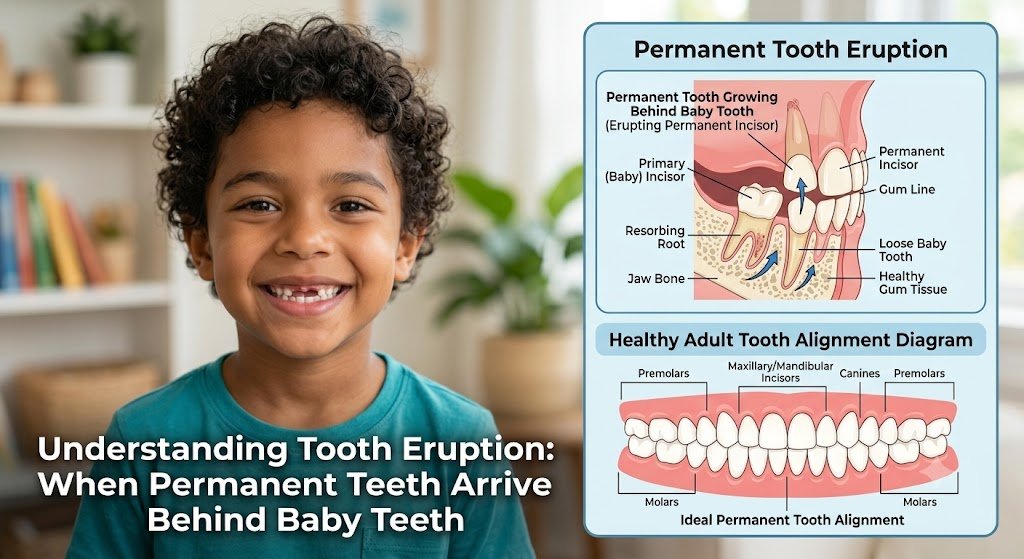
Teeth Growing Behind Milk Teeth: Causes, Treatment, and When to Worry
Introduction
If you notice teeth growing behind milk teeth, don’t panic. This common dental situation often happens when a permanent tooth begins erupting before the baby tooth has fallen out. Sometimes called “shark teeth,” the condition usually resolves naturally as the baby tooth loosens. However, in some cases, a tooth growing behind baby tooth may require a dentist’s attention to prevent alignment problems. Understanding why this happens, what signs to watch for, and when treatment is necessary can help protect your child’s developing smile.
What Does Teeth Growing Behind Milk Teeth Mean?
When a permanent tooth starts erupting behind an existing baby tooth instead of replacing it directly, it creates the appearance of two rows of teeth. Parents often describe this as a tooth growing behind another tooth because the new tooth seems to emerge in the wrong position.
Normally, permanent teeth dissolve the roots of baby teeth before they erupt. Once the roots disappear, the baby tooth becomes loose and falls out naturally. If root resorption doesn’t happen completely, the permanent tooth may take an alternative path and appear behind the baby tooth.
This condition is most commonly seen in children between the ages of 5 and 7, especially with the lower front teeth.
Why Does a Tooth Grow Behind a Baby Tooth?
Several factors can contribute to a permanent tooth erupting behind a baby tooth.
Delayed Baby Tooth Loss
One of the most common reasons is that the baby tooth hasn’t become loose when the permanent tooth is ready to emerge.
The permanent tooth simply follows the path of least resistance and erupts behind it.
Slow Root Resorption
Sometimes the roots of baby teeth dissolve more slowly than expected.
As a result, the permanent tooth cannot move into its intended position and instead erupts behind the existing tooth.
Genetics
Children often inherit tooth eruption patterns from their parents.
If parents experienced delayed tooth loss or crowded teeth during childhood, their children may have similar dental development.
Crowded Jaw
A small jaw or limited space can force permanent teeth to erupt at unusual angles.
Crowding increases the likelihood that a permanent tooth will appear behind another tooth.
Eruption Timing Differences
Every child’s dental development is unique.
Some permanent teeth simply erupt earlier than expected while the baby tooth remains firmly in place.
Is It Normal for Permanent Teeth to Grow Behind Baby Teeth?
Yes. In many cases, this is completely normal.
Dentists frequently see lower permanent front teeth erupt behind baby teeth during early childhood. Once the baby tooth begins to loosen, natural tongue pressure often guides the permanent tooth into its proper position.
However, every child should still be evaluated if the baby tooth remains firm after the permanent tooth has erupted significantly.
Generally, it becomes more concerning if:
- The baby tooth is not loose.
- The permanent tooth has erupted more than halfway.
- Pain or swelling develops.
- Multiple teeth are affected.
- Crowding appears severe.
Which Teeth Are Most Commonly Affected?
Although any permanent tooth can erupt behind a baby tooth, certain teeth are affected more often.
These include:
- Lower central incisors
- Lower lateral incisors
- Upper front teeth
- Occasionally lower canines
The lower front teeth account for the majority of cases because their eruption angle often changes during development.
Signs That a Tooth Is Growing Behind Another Tooth
Parents usually notice visible changes before children experience discomfort.
Common signs include:
- Two rows of teeth
- Permanent tooth visible behind the baby tooth
- Baby tooth remains firmly attached
- Mild gum tenderness
- Difficulty brushing crowded teeth
- Food becoming trapped more easily
Many children experience little or no pain during this process.
When Should You See a Dentist?
Although many cases resolve without intervention, it’s wise to schedule a dental examination if you notice a tooth growing behind another tooth.
Seek professional evaluation if:
- The baby tooth isn’t loose after several weeks.
- The permanent tooth continues erupting behind it.
- Your child experiences pain.
- The gums become swollen or infected.
- Teeth appear severely crowded.
- Chewing becomes uncomfortable.
Early assessment helps prevent future orthodontic complications.
How Dentists Diagnose the Problem
Dentists perform a comprehensive oral examination to determine whether treatment is needed.
The evaluation may include:
Visual Examination
The dentist checks:
- Tooth position
- Baby tooth mobility
- Gum health
- Available space
- Bite alignment
Dental X-Rays
X-rays help identify:
- Root development
- Position of permanent teeth
- Remaining baby tooth roots
- Jaw space
- Any hidden eruption problems
These images allow the dentist to create the most appropriate treatment plan.
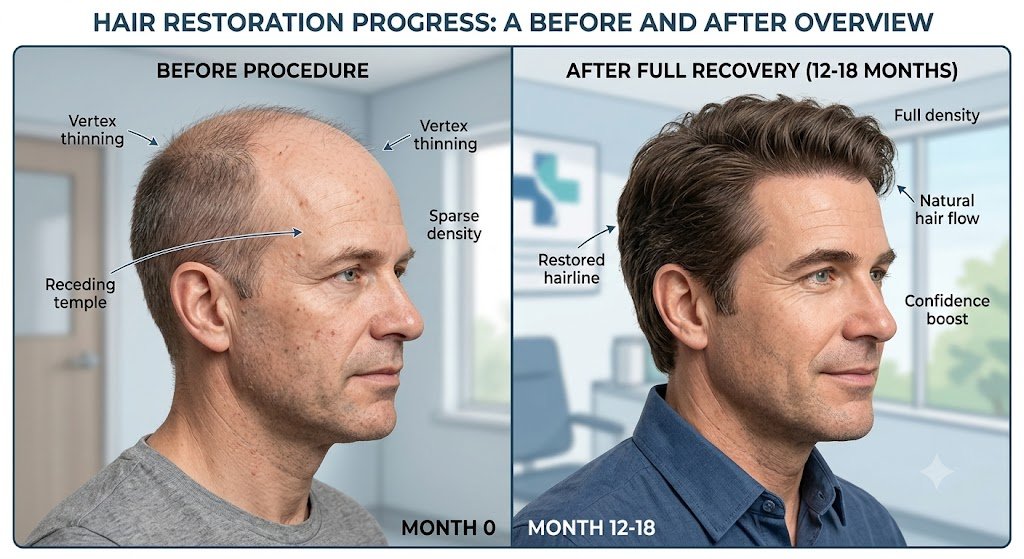
if tou want to know, Are Hair Transplants Worth It?, click here.
Treatment Options for Teeth Growing Behind Milk Teeth
Treatment depends on your child’s age, tooth position, and whether the baby tooth is becoming loose naturally.
Observation
If the baby tooth is already loose, dentists often recommend monitoring the situation.
Within a few weeks:
- The baby tooth usually falls out.
- The tongue naturally pushes the permanent tooth forward.
- Alignment gradually improves.
Encouraging Natural Tooth Loss
Your dentist may recommend:
- Eating crunchy fruits and vegetables
- Gentle wiggling of the loose baby tooth
- Maintaining excellent oral hygiene
Parents should avoid forcefully pulling teeth that remain firmly attached.
Baby Tooth Extraction
If the baby tooth refuses to loosen, extraction may be recommended.
This is a simple procedure that:
- Removes the obstruction
- Gives the permanent tooth room
- Reduces the risk of prolonged crowding
Children generally recover quickly after extraction.
Orthodontic Monitoring
Sometimes the permanent tooth doesn’t move into its ideal position even after the baby tooth is removed.
In these cases, your dentist may recommend monitoring growth before deciding whether braces or other orthodontic treatment will be necessary later.
What Happens After the Baby Tooth Is Removed?
Many parents worry that the permanent tooth will remain permanently out of place.
Fortunately, this is rarely the case.
After removal of the baby tooth:
- The tongue naturally applies gentle pressure.
- The permanent tooth gradually shifts forward.
- Jaw growth creates additional space.
- Alignment often improves within several months.
Younger children generally experience the greatest amount of natural correction.
Can Teeth Growing Behind Milk Teeth Cause Problems?
Most cases are temporary and harmless.
However, untreated cases can occasionally lead to:
- Crowded teeth
- Bite problems
- Difficulty cleaning teeth
- Increased plaque buildup
- Higher risk of cavities
- Gum inflammation
- Future orthodontic treatment
Early evaluation significantly reduces these risks.
How to Care for Your Child’s Teeth During This Stage
Good oral hygiene becomes even more important when teeth overlap.
Help your child by:
- Brushing twice daily with fluoride toothpaste.
- Flossing carefully around crowded teeth.
- Using a soft-bristled toothbrush.
- Limiting sugary snacks and drinks.
- Drinking plenty of water.
- Attending regular dental checkups.
Proper cleaning prevents plaque from accumulating between closely positioned teeth.
Can This Condition Be Prevented?
Unfortunately, it usually cannot.
Tooth eruption follows genetic and developmental patterns that parents cannot control.
However, you can reduce complications by:
- Scheduling routine dental visits.
- Monitoring loose baby teeth.
- Encouraging healthy oral hygiene.
- Seeking prompt evaluation when permanent teeth appear unexpectedly.
- Following your dentist’s recommendations.
Early monitoring helps identify concerns before they become more serious.
Common Myths About Teeth Growing Behind Baby Teeth
Myth 1: It Always Requires Braces
Not true.
Many permanent teeth naturally move into position after the baby tooth falls out.
Myth 2: Parents Should Pull the Baby Tooth Immediately
Incorrect.
Removing a firmly attached baby tooth at home can cause unnecessary pain and bleeding.
A dentist should determine whether extraction is appropriate.
Myth 3: It Means Something Is Wrong
In most children, this is simply part of normal dental development.
Only persistent cases require treatment.
Myth 4: Permanent Teeth Will Stay Crooked Forever
Many teeth continue moving into better alignment for months after eruption, especially in younger children.
Tips for Parents
If you discover a tooth growing behind baby tooth, remain calm and observe the situation carefully.
Helpful steps include:
- Take a clear photo to monitor changes.
- Check whether the baby tooth becomes loose.
- Encourage gentle brushing around both teeth.
- Avoid attempting home extraction.
- Schedule a dental appointment if unsure.
- Keep regular six-month dental visits.
Most children experience little discomfort and achieve excellent outcomes with timely care.
FAQs
1. Is it normal to have teeth growing behind milk teeth?
Yes. This commonly occurs when permanent teeth erupt before baby teeth fall out. In many cases, the baby tooth loosens naturally, allowing the permanent tooth to move into its correct position without extensive treatment.
2. What causes a tooth growing behind baby tooth?
The most common causes include delayed baby tooth loss, slow root resorption, limited jaw space, genetics, and natural differences in eruption timing. A dental examination can determine the exact reason.
3. Does a tooth growing behind another tooth always need extraction?
No. If the baby tooth is already loose, dentists often recommend observation. Extraction is usually considered only when the baby tooth remains firmly attached and blocks the permanent tooth’s path.
4. How long does it take for permanent teeth to move into place?
After the baby tooth falls out or is removed, permanent teeth often begin shifting naturally within weeks. Complete alignment may continue improving over several months as the jaw grows.
5. When should I worry about teeth growing behind milk teeth?
You should contact a dentist if the baby tooth remains firm, the permanent tooth erupts significantly behind it, pain or swelling develops, or severe crowding affects your child’s bite or oral hygiene.
Conclusion
Seeing teeth growing behind milk teeth can be surprising, but it is often a normal part of childhood dental development. In many cases, the permanent tooth moves into its proper position after the baby tooth falls out naturally or is removed by a dentist. The key is monitoring the situation, maintaining excellent oral hygiene, and seeking professional advice when necessary. If your child has a tooth growing behind baby tooth or a tooth growing behind another tooth, an early dental evaluation can provide peace of mind and help ensure a healthy, well-aligned smile for years to come.

One thought on “Teeth Growing Behind Milk Teeth: Causes & Treatment”