How Much Are Phlebotomy Classes? Complete Cost Guide for 2026
Introduction
If you’re wondering how much are phlebotomy classes, the short answer is that most programs cost between $700 and $3,000, depending on the school, location, certification included, and whether the course is online, in person, or hybrid. Some community colleges offer affordable training for under $1,000, while private career schools may charge more for accelerated programs. Understanding these costs before enrolling can help you choose a program that fits both your career goals and your budget.
How Much Are Phlebotomy Classes?
The cost of phlebotomy classes varies based on several factors, but here’s a general breakdown of what most students can expect.
| Program Type | Average Cost |
|---|---|
| Community College | $700–$1,500 |
| Vocational School | $1,000–$2,500 |
| Private Career School | $1,500–$3,000 |
| Hospital-Based Training | Free–$1,500 |
| Online Phlebotomy Course | $500–$2,000 (plus clinical training) |
These figures typically include classroom instruction and laboratory practice. However, some programs charge additional fees that students should plan for before enrolling.
What Is Included in the Cost of Phlebotomy Classes?
The advertised tuition may not cover every expense. Before signing up, ask for a complete list of fees.
Many programs include:
- Classroom instruction
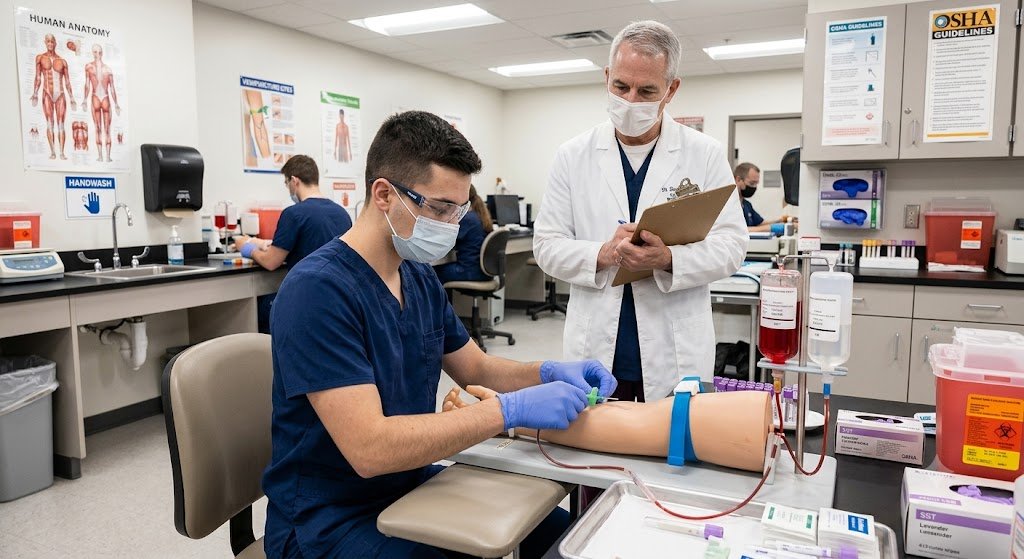
- Hands-on laboratory training
- Clinical practice
- Student manuals
- Practice supplies
- Skills assessments
Some schools also include certification exam preparation, while others charge separately.
Always compare what’s included instead of focusing only on the tuition price.
Additional Costs You Should Expect
Besides tuition, students often pay for required materials and testing.
Common additional expenses include:
- Registration fees
- Textbooks
- Uniforms or scrubs
- Medical gloves
- CPR certification
- Background checks
- Drug screening
- Immunizations
- Liability insurance
- Certification exam fees
- Graduation fees
These extra costs usually range from $200 to $800, depending on the program.
Factors That Affect Phlebotomy Class Costs
Several elements influence how much you’ll pay for training.
Type of School
Community colleges generally offer the lowest tuition because they receive public funding.
Private career schools often cost more but may provide flexible schedules, smaller class sizes, and faster completion.
Program Length
Short intensive programs can sometimes cost more per week than longer courses because they compress training into fewer months.
Location
Training programs in large metropolitan areas often have higher tuition than those in smaller towns.
However, local demand for healthcare workers may influence pricing.
Included Certification
Some schools include national certification exam fees within tuition.
Others require students to pay separately after completing the course.
Hands-On Clinical Experience
Programs offering extensive clinical rotations often charge slightly higher tuition because they partner with healthcare facilities.
if you want to know, Are Hair Transplants Worth It?, click here.
Community College vs Private School Costs
Choosing between a community college and a private training center depends on your priorities.
Community Colleges
Advantages include:
- Lower tuition
- Accredited education
- Experienced instructors
- Access to financial aid
- Strong academic support
Potential drawbacks include:
- Limited enrollment
- Longer waiting lists
- Fixed schedules
Private Career Schools
Benefits include:
- Faster completion
- Flexible class times
- Frequent start dates
- Career placement assistance
Possible disadvantages:
- Higher tuition
- Limited financial aid
- Varying accreditation standards
Research both options carefully before enrolling.
Are Online Phlebotomy Classes Cheaper?
Many students consider online learning because it appears less expensive.
While online coursework often costs less, phlebotomy requires practical skills that cannot be learned entirely online.
Most online programs include:
- Virtual lectures
- Digital assignments
- Video demonstrations
Students still need to complete:
- Laboratory practice
- Clinical training
- Blood collection experience
- Required venipunctures
As a result, fully online phlebotomy certification usually isn’t possible.
How Long Do Phlebotomy Classes Last?
Program length affects total costs.
Typical durations include:
- 4–8 weeks for accelerated courses
- 2–4 months for certificate programs
- One semester at community colleges
- Up to one year for comprehensive healthcare training
Longer programs may provide additional medical knowledge that can improve future employment opportunities.
Is Financial Aid Available?
Many students qualify for assistance that significantly lowers education costs.
Possible funding sources include:
- Federal financial aid
- Pell Grants
- Workforce development grants
- State education grants
- Employer tuition reimbursement
- Scholarships
- Veterans benefits
- Payment plans
Community colleges usually offer more financial aid opportunities than private schools.
Always complete financial aid applications before paying tuition out of pocket.
Can You Take Free Phlebotomy Classes?
Yes, although free programs are limited.
Some opportunities include:
- Hospital workforce development programs
- Nonprofit healthcare organizations
- Local workforce centers
- Apprenticeship programs
- Employer-sponsored training
In many cases, you’ll agree to work for the sponsoring organization after completing training.
This arrangement can reduce education costs while helping you secure employment.
Is a More Expensive Program Better?
Not necessarily.
Higher tuition doesn’t always mean higher-quality education.
Instead, compare programs based on:
- Accreditation
- Instructor qualifications
- Graduation rates
- Certification exam pass rates
- Clinical experience
- Job placement support
- Student reviews
- Employer reputation
A lower-cost program with strong outcomes may provide better overall value.
Certification Costs After Training
Completing your classes is only part of becoming a phlebotomy technician.
Many employers prefer nationally certified candidates.
Certification exam fees generally range from $90 to $200, depending on the certifying organization.
Some schools include these costs in tuition, while others require separate payment.
When comparing programs, ask whether certification testing is included.
Average Total Investment
When all expenses are combined, students typically spend:
| Expense | Estimated Cost |
|---|---|
| Tuition | $700–$3,000 |
| Books & Supplies | $100–$400 |
| Uniforms | $50–$150 |
| Background Check | $30–$100 |
| Drug Test | $25–$75 |
| Immunizations | $50–$300 |
| Certification Exam | $90–$200 |
Estimated total: $1,000–$4,000
The exact amount depends on your location and chosen school.
How to Save Money on Phlebotomy Classes
You don’t necessarily have to pay the highest tuition to receive quality training.
Here are practical ways to reduce costs.
Compare Multiple Schools
Request detailed tuition breakdowns from several institutions.
Look beyond advertised prices and compare total expenses.
Choose a Community College
Public colleges often provide excellent education at significantly lower tuition.
Ask About Payment Plans
Many schools allow monthly payments without requiring the entire tuition upfront.
Apply for Scholarships
Healthcare workforce scholarships may cover part or all of your training.
Even smaller awards can reduce your out-of-pocket expenses.
Check Employer Sponsorship
Some hospitals, laboratories, and healthcare organizations pay for employee training.
If you’re already working in healthcare, ask your employer about tuition assistance.
Avoid Unnecessary Fees
Purchase used textbooks when permitted and confirm whether uniforms or supplies are included before buying additional items.
Is Becoming a Phlebotomist Worth the Cost?
For many students, the answer is yes.
Compared with many healthcare careers requiring years of education, phlebotomy offers:
- Short training period
- Lower education costs
- Strong demand for skilled workers
- Entry into healthcare
- Opportunities for career advancement
Many graduates later continue their education in nursing, medical laboratory science, or other allied health professions.
If you’re seeking a healthcare career with relatively low educational costs and quick entry into the workforce, phlebotomy can provide an excellent starting point.
How to Choose the Right Phlebotomy Program
Before enrolling, ask these questions:
- Is the program accredited?
- What is the total cost, including all fees?
- Does tuition include certification exam preparation?
- How many clinical hours are required?
- What percentage of graduates pass certification exams?
- Does the school provide job placement assistance?
- Are instructors experienced healthcare professionals?
- Are classes available during evenings or weekends?
Choosing a reputable program can make your investment more worthwhile.
FAQs
1. How much are phlebotomy classes on average?
Most phlebotomy classes cost between $700 and $3,000, depending on the school, location, and program type. Additional fees for books, uniforms, and certification may increase the total investment to around $1,000–$4,000.
2. Are online phlebotomy classes less expensive?
Yes, online coursework often costs less than traditional classroom programs. However, students must still complete in-person laboratory training and clinical practice to develop essential blood collection skills.
3. Can financial aid cover phlebotomy classes?
Many accredited schools accept federal financial aid, grants, scholarships, and workforce development funding. Eligibility depends on the institution and the student’s financial circumstances.
4. How long does it take to complete phlebotomy training?
Most programs take between four weeks and four months to complete. Community college certificate programs may last one academic semester, while accelerated private courses can finish sooner.
5. Is certification included in phlebotomy class tuition?
It depends on the school. Some programs include certification exam fees and preparation materials, while others require students to pay separately after completing their coursework.
Conclusion
Understanding how much are phlebotomy classes helps you make an informed decision before investing in your healthcare education. While tuition generally ranges from $700 to $3,000, your total cost may reach $1,000 to $4,000 once books, supplies, screenings, and certification fees are included. Comparing accredited programs, exploring financial aid, and reviewing everything included in the tuition can help you find the best value. With careful planning, phlebotomy training can be an affordable path into a rewarding healthcare career. Take time to compare programs, ask detailed questions, and choose the option that best supports your long-term professional goals.